



Product Description
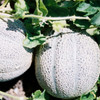
Green Nutmeg Melons are a variety of muskmelon and get their name from their oblong shape, which resembles a nutmeg. The skin of the Green Nutmeg Melon is heavily netted, and the flesh is a vivid green and very sweet. The melons weigh about 2-3 pounds. This is an excellent short-season melon that sweetens even in cold climates. These Heirloom Green Nutmeg Melon Seeds are part of The Seeds That Built America collection by Harvesting History and are made in the USA!
Planting and Care
Plant in a location with full sun. Sow seed in late spring after all danger of frost has passed and the soil is warm. Plant seeds at a 1-inch depth in hills that are spaced 8 feet apart. Well-rotted manure mixed into the bottom of each hill will stimulate growth and substantially increase yield.
Seeds germinate in 7-10 days, depending on soil and weather conditions. When seedlings are 3 inches high, thin to the 3 strongest plants per hill. Approximately 80 days until harvesting can begin.
Inspiration
Melons are native to Africa. Many wild forms of melons and watermelons can still be found there today. Though it is not known when melons were first cultivated, it is believed that prehistoric man may have gathered and saved the seeds of the sweetest melons, leading to cultivation.
Seeds and wall paintings found in Egyptian tombs indicate that melons and watermelons were under cultivation in Egypt at least 4000 years ago. Melons were introduced into Asia about 3000 years ago.
The melon became immensely popular in the region that includes Iran, Iraq, Afghanistan, India, South and Central Russia, China, and Japan. The Greeks and Romans most likely introduced the melon into Europe. Melons were brought to the Americas on Columbus's second voyage, and by 1494, melons were under cultivation in Haiti. By the 16th century, melons and watermelons were being cultivated throughout North and South America.
Green Nutmeg Melons (Cucumis melo var. reticulatis) are native to Europe and are one of the oldest named melons. This muskmelon was introduced into the US before 1830. Muskmelons and their close relatives, Persian melons, are the melons Americans know best. In America, muskmelons are frequently misidentified as cantaloupes. Muskmelons are distinctive for the netting that covers most of their rind, and they are usually ribbed. The melons come in many sizes and shapes, including round, oval, and cylindrical. The flesh is generally orange and quite sweet, but some varieties of muskmelon, specifically Persian melons, can have green or white flesh. Some green-fleshed melons are quite sweet, but most of the green- and white-fleshed melons have a less sweet, but very refreshing flavor.
Eighteenth-century Williamsburg was the home of many ardent gardeners and plant collectors who often exchanged seeds with fellow enthusiasts in Great Britain. Gardeners obtained their seeds from store merchants or from traveling seedsmen. Today, the Colonial Williamsburg seed program continues the tradition by offering many varieties grown in the 18th century.