


Product Description
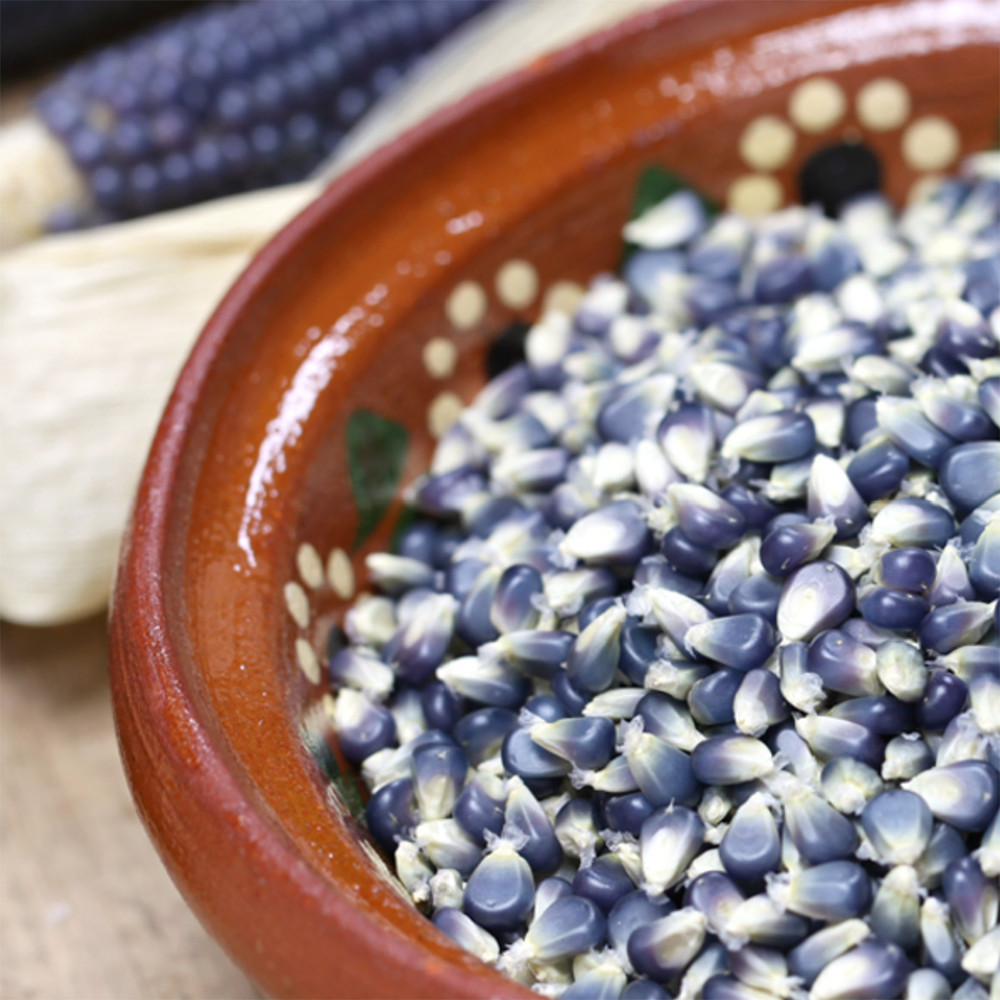
Blue Hopi Corn is a beautiful, purplish-blue corn variety traditionally used by Native Americans. The ears of corn average 8 inches long, and the kernels are rich in antioxidants. Blue corn can be eaten fresh when the corn is very young, but is typically allowed to dry on the stalk and then ground into cornmeal or made into hominy. Dried kernels can also be used for popcorn. These heirloom Blue Hopi Corn seeds are part of The Seeds That Built America collection by Harvesting History and are made in the USA!
Planting and Care
Corn requires warm soil (65-75 degrees) to germinate and rich soil to grow. Wait until after the last frost to sow seeds directly into the ground. Corn prefers a light, loamy soil that has been lightly fertilized. Prepare the soil with dried manure several weeks prior to planting.
Sow seeds, 1.5 inches deep, 3-4 inches apart, in rows 18 inches apart. Seeds will germinate in 7-10 days. Thin seedlings when they are 2 inches tall to 6-8 inches apart. For intensive backyard gardening, rows can be as close as 15 inches, but the plants will require frequent fertilization. Because corn is wind-pollinated, to maximize the number of fully developed ears, it should be planted in nearly square beds. Plants reach maturity in about 95 days.
Inspiration
Squash, beans, and corn, known as the "Three Sisters," formed the trinity of the staple diet of Native Americans. Native to North and South America, corn is one of the planet's major food crops. It has been cultivated for at least 8000 years.
Corn was grown from Brazil and Chile to as far north as southern Canada. It was a key ingredient in the diets of the Aztecs, the Mayans, and the Incas, and even before these civilizations appeared, corn was cultivated by prehistoric peoples of the Americas.
Corn is believed to have originated from a wild grass called teosinte. The word teosinte actually means ‘God’s corn’. Teosinte still grows as a wild grass in Mexico, Honduras, and Guatemala. Even today, it is so genetically similar to primitive types of maize that the plants frequently cross-fertilize. Interestingly, our modern corn has become so specialized that it cannot survive without human cultivation.
Eighteenth-century Williamsburg was the home of many ardent gardeners and plant collectors who often exchanged seeds with fellow enthusiasts in Great Britain. Gardeners obtained their seeds from store merchants or from traveling seedsmen. Today, the Colonial Williamsburg seed program continues the tradition by offering many varieties grown in the 18th century.
Discover Stories of American Indian Life at Colonial Williamsburg.