

Product Description
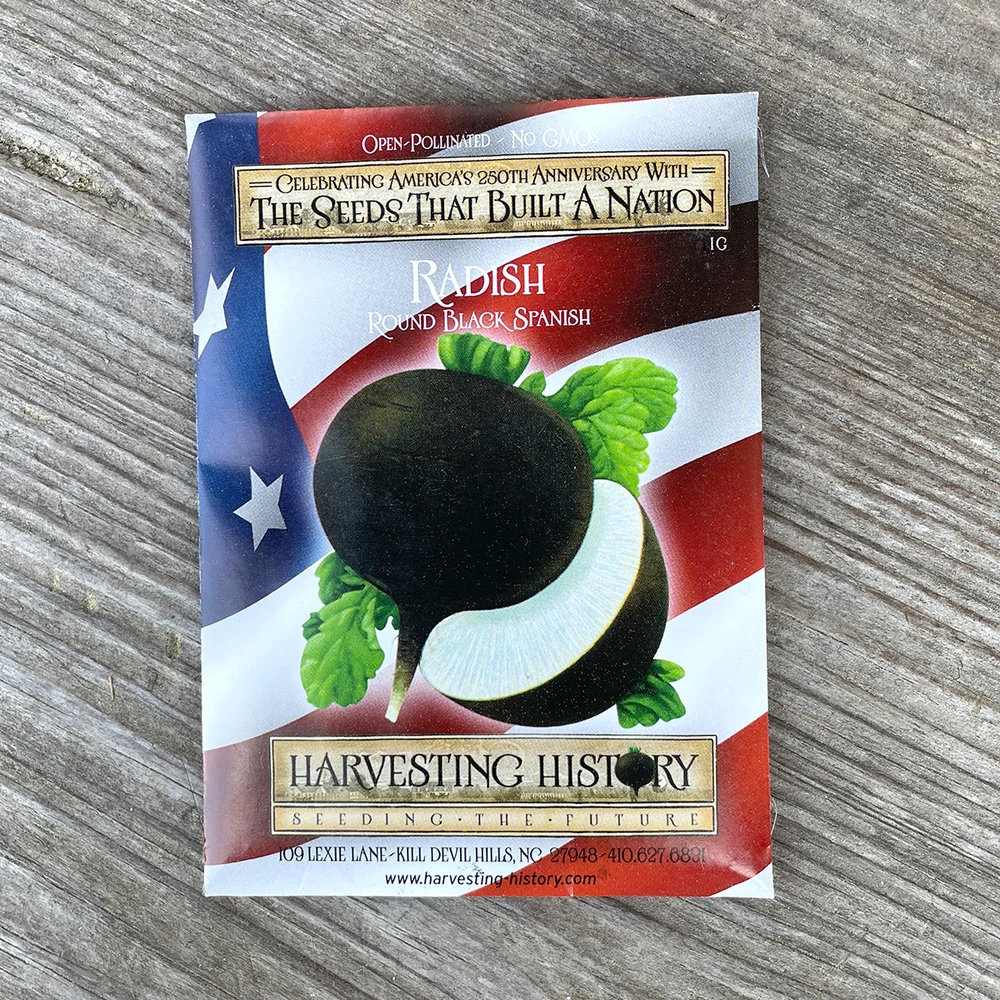
The 3-inch Spanish Black Radish features a black exterior and creamy white flesh with a mild, peppery flavor. This annual root vegetable tolerates frosts and stores well over the winter. They make a spicy addition to salads, soups, and stews, and roast well in the oven. Try roasting your black radishes with other root vegetables in the oven in olive oil for a satisfying winter dish rich in nutrients such as vitamin C and potassium. These heirloom Spanish Black Radish seeds are part of The Seeds That Built America collection by Harvesting History and are made in the USA!
Planting and Care
Plant your Spanish Black Radishes in full sun from mid-summer through early fall at a depth of 1/2 inch, spaced 3 inches apart, with rows 6-8 inches apart. The soil should be deeply spaded before planting and amended with bone meal for stronger root development and lime to sweeten the radishes. Seeds germinate in 5-7 days, and plants mature in about 65 days. Radishes can be succession-planted or planted in stages about 10 days apart to ensure a staggered harvest over the growing season.
Radishes need consistent, moderate watering each week. Be sure to water at the roots evenly on the same schedule to avoid the roots splitting or becoming overly pungent.
Inspiration
Radishes originated in what is now China. In prehistoric times, the radish spread to Central Asia, where many different forms were developed, and soon after, it spread to the Mediterranean. Before the pyramids were constructed, ancient Egyptian writing shows that radishes were being cultivated, and the ancient Greeks valued the radish so highly that they offered little gold radishes to the god Apollo. The Romans were also familiar with various forms of the radish. In the Middle Ages, in both Europe and Asia, a fascination with giant radishes was created. Giant radishes were described in Germany in the 13th century, and a German botanist reported seeing radishes weighing 100 pounds in 1544!
Small radishes were not recorded in Europe and Britain until after the middle of the 16th century, but by 1586, they were common throughout Europe and Great Britain. The radish was one of the first vegetables introduced into the Americas during colonization. Radishes were under cultivation in Mexico by 1500 and in Haiti by 1565. Radishes quickly became popular as they are easy to grow, provide sustenance over the winter, and store and travel well.
Eighteenth-century Williamsburg was the home of many ardent gardeners and plant collectors who often exchanged seeds with fellow enthusiasts in Great Britain. Gardeners obtained their seeds from store merchants or from traveling seedsmen. Today, the Colonial Williamsburg seed program continues the tradition by offering many varieties grown in the 18th century.